
Carolyn Larkin Taylor, MD
Neurologist • Author • Storyteller
Where medicine meets humanity.
For more than thirty years, I cared for patients whose illnesses revealed the extraordinary resilience of the human spirit. Their stories—and the lessons they taught me—live on in my award-winning memoir.
Whispers of the Mind invites readers inside the exam room, the intensive care unit, and the quiet moments that forever changed the way I understand life, loss, hope, and healing.
🏆 2026 Next Generation Indie Book Awards Finalist (Memoir)
🏆 2026 National Indie Excellence Awards Finalist (Science)
FEATURED BOOK
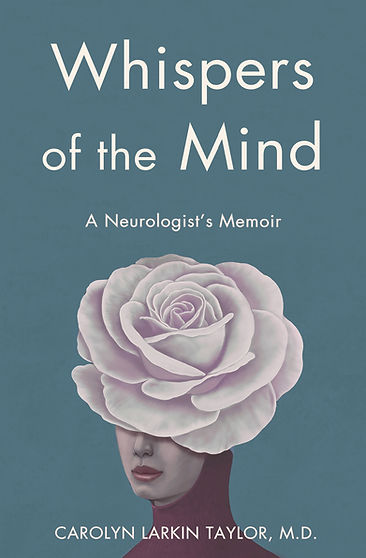
WHISPERS OF THE MIND
An award-winning memoir by Carolyn Larkin Taylor, MD
Some patients become unforgettable.
Some change the physician forever.
This poignant memoir unfolds in a series of essays that trace the author's path from medical school to private practice, revealing moments of triumph, heartbreak, and transformation. Written with compassion and insight, Whispers of the Mind explores the emotional weight of caring for patients while also celebrating the remarkable resilience of those facing neurological challenges. These essays are more than reflections; they are testaments to the courage, strength, and the profound lessons learned along the way.
Book Trailer

Reader's Favorite Review
Whispers of the Mind is a medical memoir and a compilation of essays that blends stories based on real-life patients, reflections on topics ranging from medicine to philosophy, and personal narratives to deliver a unique meditation on life and death. Drawing from decades of clinical experience, neurologist Carolyn Larkin Taylor, MD. pulls the reader into a world filled with humanity, hope, courage, and resilience in the face of cruel, often unfair circumstances. Starting from her time in medical school to private practice, the author discusses individual cases, general themes such as addiction and the AIDS epidemic, and thoughts about grief, caring for children, dignity in death, and other subjects. Some chapters also explore difficult aspects of Taylor's life, including the challenges of pursuing a medical career while raising a child.
The writing is perfectly accessible to nonexperts, using vivid metaphors and simple language to explain complex concepts and conditions. For example, epilepsy is described as a thunderstorm in the brain, and spinal cord motor neurons are portrayed as orchestra players coordinating the symphony of muscle contraction. But rather than technical minutiae and medical terminology, Carolyn Larkin Taylor focuses on the human side of things s she writs from an honest, personal perspective that acknowledges limitations, intuition, and subjectivity. The book kept me immersed from beginning to end, as each essay felt more like a conversation than a dry description of medical cases. The chapters dealing with the death of loved ones, felt particularly poignant and impactful. Overall, Whispers of the Mind is a must-rad for lovers of memoirs and those involved or interested in the medical field, especially neurology.
- Reader's Favorite
.png)
Reviews
ABOUT THE AUTHOR
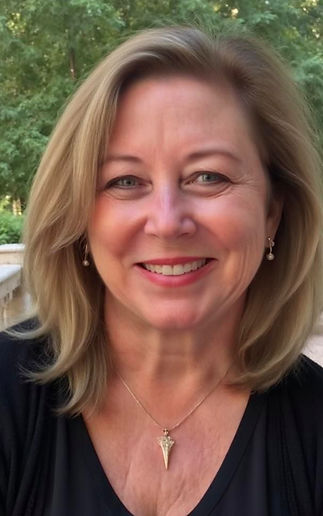
Carolyn Larkin Taylor is a board-certified neurologist with over 30 years of experience in general neurology. After growing up in Spring Lake, New Jersey, she was among the first women to graduate from the University of Notre Dame. She later moved to Philadelphia, where she obtained her MD from Hahnemann Medical College, completed a medicine internship at the Medical College of Pennsylvania, and finished her neurology residency at the University of Pennsylvania. While in Philadelphia, she received the Humaneness in Medicine Award from the Philadelphia Medical Society and was named one of Philadelphia magazine's Top Doctors for Women.
In addition to private practice she also served as medical director for the Parkinson's Outreach Center. In 2001, she moved to the Pacific Northwest, where she founded Northwest Neurology and the Cascadia Center for Multiple Sclerosis, ultimately concluding her clinical career at Swedish Neuroscience Center in Seattle. Throughout her journey, she has been a passionate advocate for MS patients and is dedicated to educating others about addiction as a brain disease. Dr. Taylor's manuscript, Through a Mother's Eyes, won second place for best unpublished memoir from the Pacific Northwest Writers Association.
She currently resides in Bellingham, WA with her husband, their Bernese mountain dog, and golden retriever, and has one adult son living in Seattle.
Step Inside the Story
From the pages of Whispers of the Mind
Every patient leaves a mark.
Some change the physician forever.
The following pages offer a glimpse into the experiences that shaped my career—and my understanding of life.
The day started like any other, with an early rise to begin my hospital rounds before 7:00 a.m. As a seasoned neurologist, this was one of those intense weeks where I was on hospital call—seven straight days of consults and admissions instead of my usual office routine. It was a warm, clear summer morning, though I barely noticed. My pager was already demanding my attention, pulling me in different directions. By now, the calls had become familiar—strokes, seizures, changes in mental status, and the occasional Parkinson's patient needing medication adjustments before surgery. I had learned to move through these cases with practiced efficiency, constantly triaging and recalibrating my day based on urgency. But through it all, one thought kept me grounded: the hope of making it home to my family at a decent hour.
Today, however, was somehow different. As I made my way around the hospital, I heard whispers of a particularly tragic case that had come in earlier that day involving a young boy who had been admitted to the intensive care unit. As a mother of a young boy myself, I hoped they would have no need for my services for this case. When a neurologist is summoned to the ICU for a consultation, it can be a sign that all the options have been exhausted.
...
The ICU consult was called in to me late that evening.
What had led up to this patient's accident would remind me of the pleadings of my own eleven-year-old son when he really wanted something badly...
...
For Matt, I would later learn from his family, that moment of sheer happiness occurred the day his parents finally acquiesced and presented him with the BB gun he had been longing for on his birthday...
...
And so this tragic story began.
Continue the Journey
If this story moved you, there are many more waiting inside Whispers of the Mind—stories of hope, heartbreak, resilience, and the remarkable people who forever changed the way I practiced medicine.
Reflections Blog
What My Mother Gave Me
My mother never graduated from college. She never became the physician she might have been, the writer she admired, or the traveler she once dreamed of becoming.
Yet she gave me every one of those possibilities.
Looking back now, I realize the greatest inheritance she left me wasn't financial security or social privilege. It was courage.
My beautiful mother, the most influential person in my life, died far too young. I was just beginning my first year of neurology residency when a brain bleed claimed her life. Long before she left me, however, she had already given me everything I would need to navigate the years ahead.
She taught me what resilience looks like.
She had not always known hardship. She grew up in privilege, attending Ogontz Military Academy, then the nation's only military boarding school for girls. After her death, I found the letters she had written home as a lonely teenager. They were heartbreaking. She longed for visits from her parents that often never came, postponed for social engagements and travel. Even surrounded by privilege, she learned early that wealth could not guarantee love or security.
Just as she was preparing to attend Bryn Mawr College, her world unraveled. Her parents divorced, and she accompanied her mother across the country to begin a new life. The future she had imagined disappeared almost overnight.
Rather than surrender to disappointment, she adapted.
She attended secretarial school, found work, and watched her own mother reinvent herself as a successful real estate agent. Together they became two of the strongest women I have ever known.
Those women became my first teachers.
Years later my mother met a young soldier preparing to leave for World War II. After a whirlwind romance they married in the intimate setting of Our Lady's Chapel in St. Patrick's Cathedral just before he deployed overseas.
When my father returned from the war, they eventually had four children. From the outside they appeared to have a happy life.
But my father struggled with severe depression during an era when little was understood about mental illness. Although brilliant and deeply gifted, he gradually became overwhelmed by the responsibility of supporting a young family. Eventually he walked away from the wife and four children he dearly loved, disappearing from our lives.
My mother suddenly found herself alone, raising four young children with virtually no financial support at a time when women couldn't even obtain a credit card or mortgage without a husband's signature.
She never complained.
She simply went to work.
My grandmother moved in to help raise us while my mother worked long hours as a legal secretary for modest pay and no benefits. Somehow, she still managed to send us to parochial school, keep food on the table, and fill our home with laughter.
I never remember feeling poor.
I remember feeling loved.
One Christmas we couldn't even afford a tree.On Christmas Eve morning my mother burst into our bedrooms announcing that we were going on an adventure.The four of us climbed into our battered Ford along with our collie dog and drove to a Christmas tree farm. Pulling into the owner's gas station, she smiled and asked, "Are you a betting man?" "Well, that depends," he answered.
"Let's flip a coin," she said. "If I win, you give us a Christmas tree. If you win, I'll buy a tank of gas."
Whether it was her irresistible smile or the sight of four hopeful children packed into that old Ford on Christmas Eve, he accepted.
She won.
Or perhaps he simply let her win.
Either way, we drove home with a beautiful freshly cut Christmas tree and a free tank of gasoline.
To this day I don't know who received the greater gift that Christmas.
My mother and grandmother filled our home with quiet lessons that shaped the rest of my life.
"Always remember," they would say, "you are just as good as everyone else, and at the same time, you are no better than anyone else." Money, they insisted, was never the measure of a successful life.
They would know. They had lived with both abundance and scarcity.
Through every season they remained optimistic, gracious, and remarkably free of bitterness. They never spoke poorly of my father. They simply explained that he was a good man who had been overcome by an illness few people understood.
As a child, I always felt safe.
More importantly, I grew up believing I could become anything.
When I announced that I wanted to become a physician, my mother's response surprised me.
"Don't you want a family someday?" she asked gently. "Medicine is a hard life. You'll miss moments you can never get back." I nodded that I understood, but the truth is, I didn't at the time.
As the daughter of a physician, she understood the sacrifices better than I did.
But once I made my decision, she became my greatest champion.
I paid my own way through college and medical school with scholarships and loans. During internship, when my own young son, Rory, was still an infant, I often called her late at night from the hospital when I was feeling overwhelmed.
Some nights I missed him so desperately that I wondered if I had made the right decision. She always knew exactly what to say. "Rory is just fine," she would reassure me. "You're the one who is suffering right now. Keep going. You've worked too hard to stop now. When he's older, he'll need you even more, and by then you'll be in a position to help him."
She was right. Oh, what a wise woman she was!
Years later my son would need me in ways neither of us could have imagined, and because I had persevered, I was able to be there for him.
My mother lived long enough to see me graduate from medical school.
She never lived to see me finish my neurology residency.
In my memoir, Whispers of the Mind, I wrote about her final illness in an essay titled Every Day Above Ground Is a Good Day—the cheerful sign she asked the nurses to place above her hospital bed. Even in the intensive care unit, facing death, her humor never deserted her.
That was my mother.
She met adversity with grace.
She met uncertainty with optimism.
She met heartbreak with courage.
As I look back over my life, I realize that every frightened family I sat beside, every patient I comforted, every young physician I encouraged, and every story I've written carries a little of her within it.
She never practiced medicine.
But through me...
a part of her always has.
Thank you, Mom.


